Many older adults are looking for ways to stay active, strong, and healthy. As we age, however, this can become more challenging for several reasons. Recovering from an injury or illness can take a long time, energy levels can decline, and older adults’ joints and muscles don’t tolerate high levels of physical stress as well as they once did. That’s why low-impact exercises are a great option to help older adults stay active.
In this article, we will explore why low-impact exercise can make a big difference for seniors, and how Peaceful Pines builds activities to ensure safe and enjoyable opportunities for movement.
What is Low-Impact Exercise
Low-impact exercise is a form of activity that intentionally places minimal stress on a person’s joint and connective tissues because it always keeps at least one foot in contact with the ground. In contrast with high-impact exercise like running and jumping, low impact-exercise emphasizes controlled, gentle movements that improve strength, flexibility, or balance. These activities are much easier on knees, hips, ankles, and spine. These areas of the body are more injury prone as we age, so engaging in low-impact exercise can reduce risks. Low-impact exercise can also be adapted for various levels of mobility so that older adults who need support can use a walker, cane, or wheelchair and still participate.
What are the Benefits for Older Adults?
- Supports joint health and mobility – Low-impact exercises allow older adults to move their joints through a comfortable range of motion without placing excessive strain on them. This type of movement, if done regularly, helps joints stay lubricated and flexible, and can improve ease during daily activities like walking, bending, and reaching.
- Boosts heart health and efficiency – Even mild and moderate physical activity can strengthen the heart and improve circulation. Other cardiovascular benefits include stabilized blood pressure and increased flow of oxygen.
- Improves balance and reduces fall risk – Many low-impact activities focus on posture, stability, and controlled movements. This can help maintain overall core strength and coordination; over time, this improvement can reduce the risk of falls and increase one’s ability to self-correct in the case of a stumble or awkward movement.
- Enhances mood and mental well-being – Physical activity can also improve mood and mental health. Activity releases important hormones that boost emotions and quality sleep.
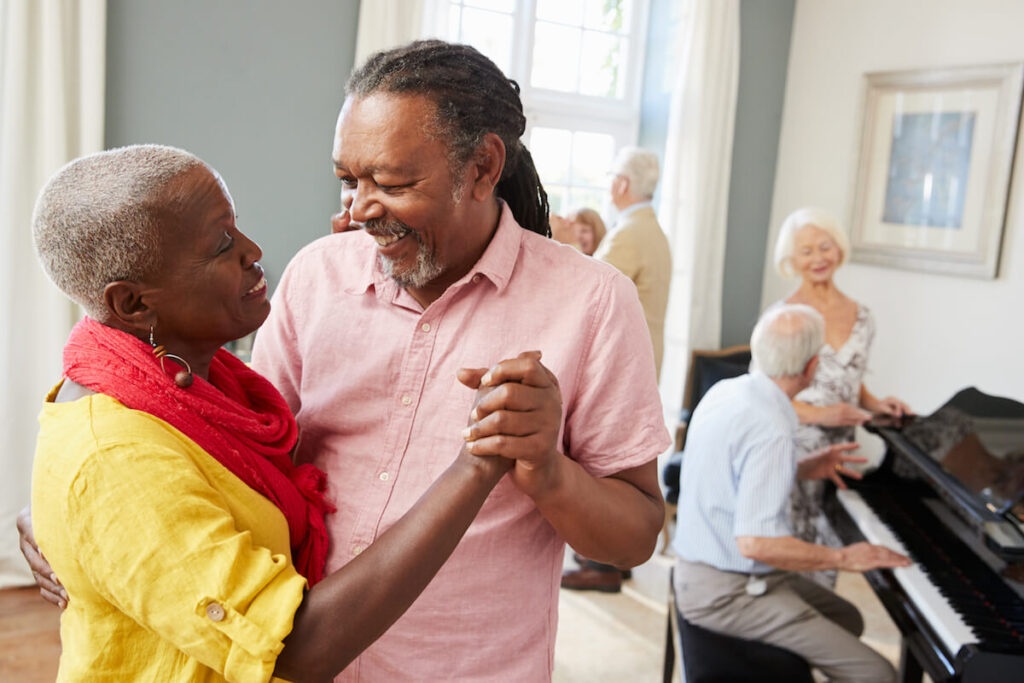
- Encourages social engagement – Participating in group activities, walking clubs, or games provides opportunities for social interaction and connection. Physical activity can be a conduit to help older adults build community, increase accountability, and encourage companionship.
What are Some Low-Impact Exercises?
To help you brainstorm, we’ve categorized some examples of low-impact exercises:
Low Impact Exercises for Groups
- Walking – Walking clubs require member accountability and is often one of the most accessible exercises. Participants can set their own goal and pace, and they can share the time with another group member.
- Chair Yoga – These classes focus on stretching, breathing, and controlled movements. This is one example of a posture focused exercise that encourages proper movement of the limbs.
- Stretching classes – Stretching exercises can help improve mobility, release tension, and prepare the body for unusual efforts.
- Balloon Volleyball – Groups can use chairs or encourage standing while keeping a balloon off the ground. The light weight of the balloon makes it safer for older adults to hit with their hands or be hit by.
- Water Aerobics – Exercising in the water reduces stress on joints and bones! The water itself produces some resistance for building strength and cardiovascular performance. This can be a creative way to cool off and move during the summer months, or indoor year round.
Low Impact Exercise to do at Home
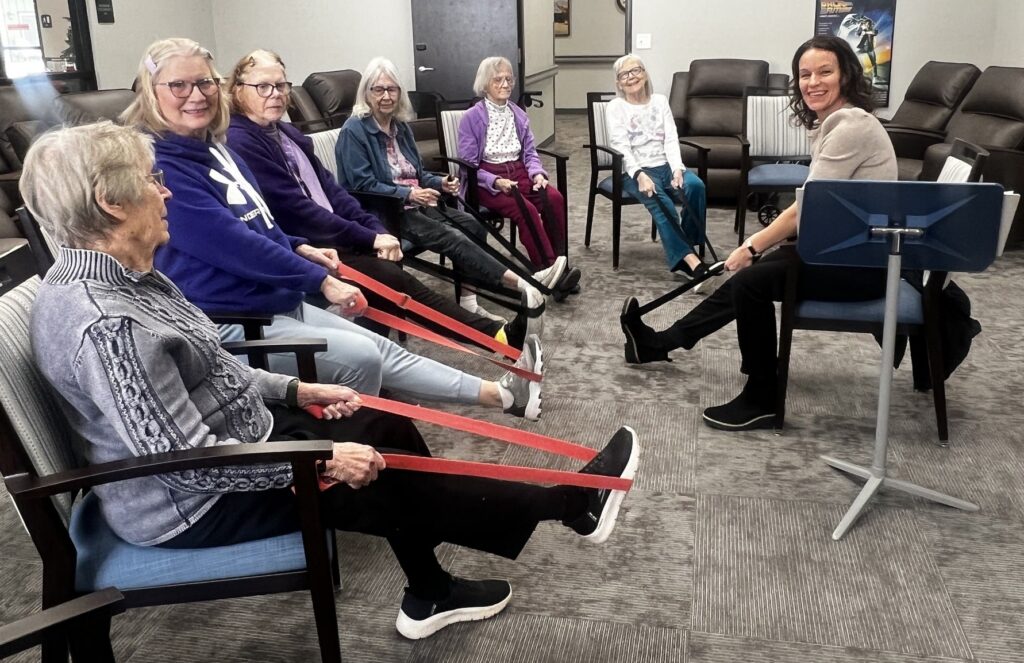
- Strength Training – Older adults can still do strength training! Resistance bands and light hand weights can provide plenty of resistance to maintain and strengthen muscle while minimizing strain. Seniors can also incorporate leg lifts while sitting to read, watch movies, or eat meals.
- Balance Exercises – Single leg stands, marching in place (with a railing or countertop nearby for support) and practicing walking heel to toe can be done standing up. If a chair or longer breaks is helpful, older adults can do sit-to-stand movements (almost like a squat, but one can sit all the way down on a chair to rest).
- Gardening – With the added benefit of being outdoors, the spring and summertime offer prime opportunity for gardening. Potting plants requires lots of coordinated movement, like digging, scooping, patting, kneeling, bending, and reaching. Plants also require maintenance like trimming and watering, which provide low-impact tasks with beautiful results!
- Sweeping and Cleaning – Many household chores like laundry, sweeping, and vacuuming practically apply low-impact exercise. These activities require some effort and flexibility but don’t always strain joints with heavy loads. Additionally, household chores are great tasks to help maintain independence, organization, and planning.
How Peaceful Pines Emphasizes Low-Impact Exercises
At Peaceful Pines, our Life Enrichment Coordinators consistently build scheduled activities that include varieties of low-impact exercise. Sometimes, these activities are in the form of games or challenges, and sometimes they are classes or demonstrations. Whichever activities you choose to attend, you can be assured that our Life Enrichment Coordinators prioritize safety and your enjoyment!
Remember, consistency will yield the most benefits of low-impact exercise, so our team encourages residents to participate and connect with their peers. Ask us about low-impact exercises and our scheduled activities when you come in for a tour!